
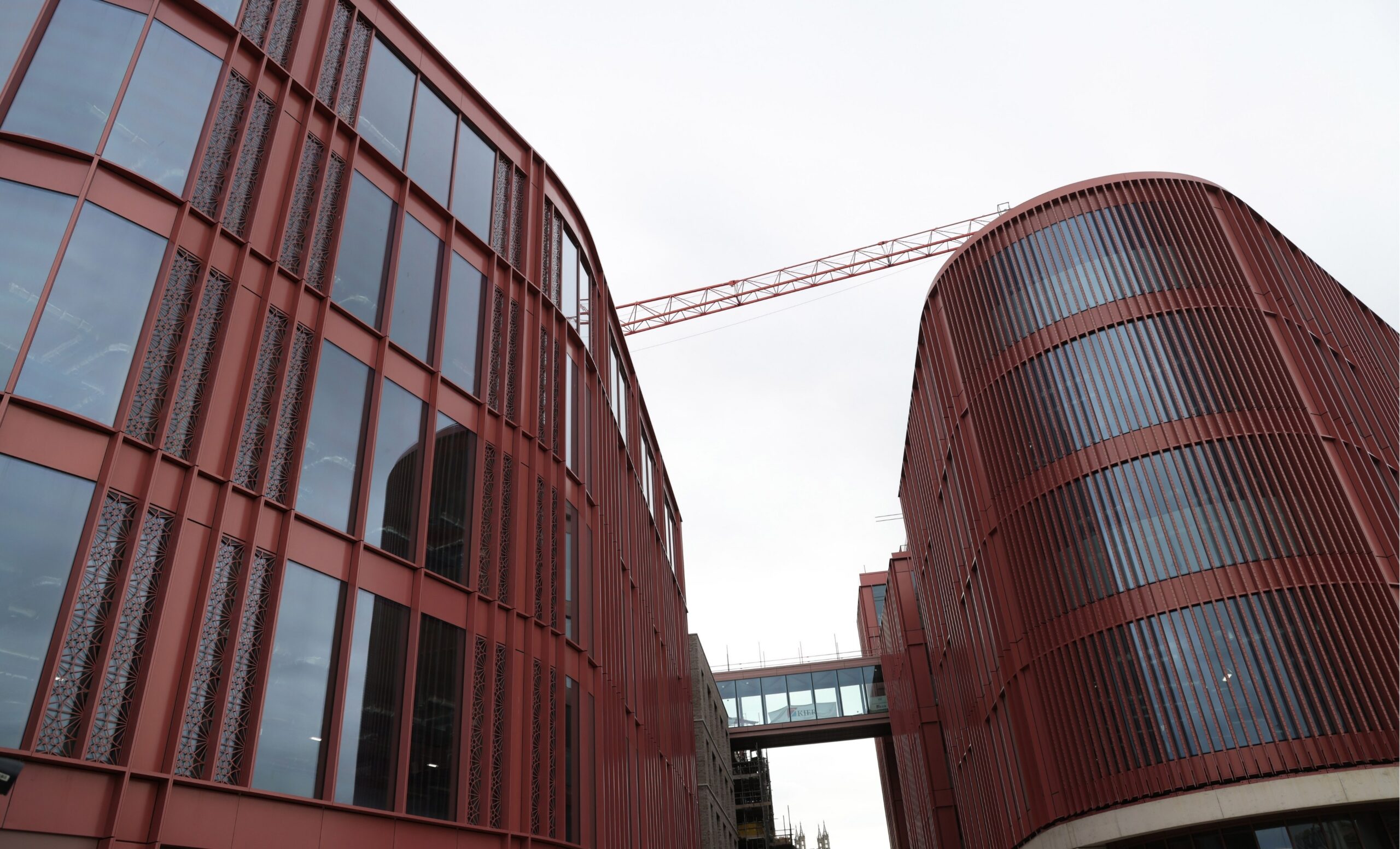
With UK office rents on the rise, a Commercial Property expert from National Chartered Surveyor Bruton Knowles underscores that the focus remains on high-quality, future-proofed office buildings, rather than a resurgence in general office market..
Rents for prime, Grade A offices in the UK are continuing to increase, driven by a shortage of modern, energy-efficient property, and higher construction and refurbishment costs. While flexible working, now offered by around 91% of UK employers, has reduced overall space requirements, competition for top-tier buildings remains strong.
Workplace design specialist Oktra reports that, as we enter 2026, London has record-high prime office rents, led by the West End at approximately £182.50 per square foot. In central London rents are slightly lower at £100 per square foot but remain at a peak for the area. Competition to occupy the best-quality space remains intense, with around 68% of all take-ups in the past year being in new or comprehensively refurbished buildings.
The report also highlights that rising construction costs, the higher cost of debt finance and tighter environmental standards are driving up office delivery costs, with landlords reflecting these pressures in rents.
Indicative of this, older office buildings often fall short of occupier expectations without major investment, further restricting available supply of high-quality, Grade A building stock.
Grade A buildings are the highest standard of office space, featuring modern design, high quality finishes and state-of-the-art facilities. They are typically located in prime areas, constructed to rigorous environmental standards and designed to offer flexible layouts that meet the needs of today occupiers.
Dorian Wragg, Head of Commercial at Bruton Knowles said: “Rising rents are not the result of higher overall demands for office space, but rather the limited availability of buildings that meet occupier requirements.
“Although hybrid working remains the preferred approach for many businesses, reducing their overall space requirements, it has also made them more selective about the offices they do occupy, driving the need for higher performing, premium spaces.”
Hybrid working has reshaped occupier priorities, with many organisations shifting their focus towards offices that enhance collaboration, wellbeing and the overall employee experience, while also benefiting from lower operating costs through improved energy efficiency.
Dorian continues: “There’s a clear shift away from outdated, period-style office buildings that no longer meet modern needs. Enclosed, cellular layouts are falling out of favour, with today’s workforce seeking open-plan, airy environments that promote transparency and connectivity. Spaces that combine dedicated work areas with breakout zones and social spaces are redefining the office as a ‘home away from home’ and a place where workers want to be.
“Energy-efficient buildings with strong ESG credentials are far more attractive, not only to staff, but also from a cost certainty and compliance perspective. Corporations and institutions are now required to meet stringent ESG standards, because sustainability, ethical governance and risk management are no longer optional. Achieving these standards often relies on landlords, occupiers, and consultants working together to embed sustainability, certifications, and efficient operations into everyday building use.
“Many property practitioners believed that office buildings with strong energy efficiency and sustainability credentials would achieve higher rents and market values, but evidence was limited until 2025. A growing number of high-profile lettings and sales now provides the first clear proof of the premium that buildings with stronger ESG credentials can command.”
This trend has further widened the divide between prime and secondary stock. Well-located, sustainable buildings continue to record rental growth and high occupancy, while offices that cannot be cost-effectively upgraded are seeing weaker demand and reduced market value.
From a landlord’s perspective, Dorian warns that rising rents should not be interpreted as signs of a broader market recovery.
He continues: “Remaining competitive in today’s office market and achieving higher rents requires strategic, long-term decision making rather than relying on cosmetic upgrades. Not every building is suitable for overhauling to Grade A so a careful asset-by-asset assessment is essential to determine whether refurbishment, redevelopment or an alternative use presents the most viable option.”
As businesses continue to develop how and where they work, high-quality office space remains a critical component of successful operations. Properties that offer flexibility, comfort and strong sustainable credentials consistently outperform the wider market and will be best placed to meet occupier demands and expectations continue to evolve.
Dorian concludes: “The office market is not declining but evolving, with rising rents highlighting the value placed on quality, performance and occupier experience. Buildings that meet these expectations will continue to attract demand as workplace patterns shift.”
Bruton Knowles, one of the UK’s most well-known chartered surveyor brands, brings extensive expertise to the Commercial sector. With its National Teams – Valuation, Commercial, Utilities & Infrastructure – supported by Building Consultancy, Land and Development, and Rural Service Teams, Bruton Knowles offers a seamless, high-standard approach to delivering complex client projects.